


ESD nitrile and coated textile gloves should be compared as specific products. Electrical evidence, cleanliness, coverage and handling requirements matter more than the material name alone.
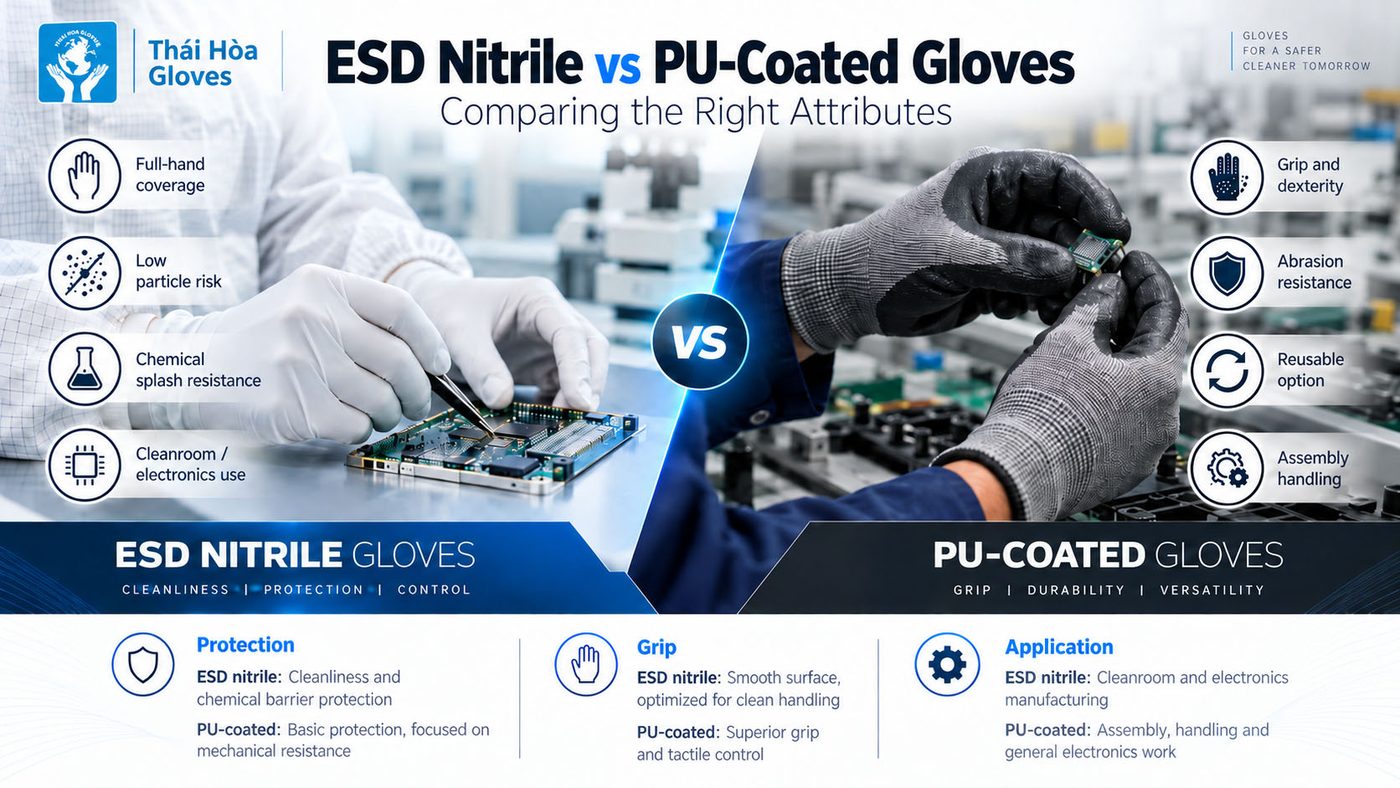
Compare construction and contact areas
A coated textile model may cover fingertips or the palm, while nitrile has a different construction. Map where the hand contacts the product. Where fibers or residues matter, evaluate the complete finished glove rather than the coating alone.
Keep claims separate
Electrical suitability does not establish chemical protection, and a nitrile label does not establish ESD performance. Trial the actual tool and component movements only after required technical evidence has been addressed.
Evaluate the glove within the ESD program
Define the application
Identify the sensitive items and the role of the glove at the workstation. Tools, packaging, work surfaces and personnel controls all influence the arrangement. Nitrile is a material description, not proof of electrical performance.
Understand the measurement
Ask for the product code, test method and measurement conditions behind an electrical result. Clarify whether the evidence concerns material, a finished glove or a wider configuration. Results for a different construction should not be transferred without review.
The ESD Association’s overview of control materials explains why a coordinated program is needed. A glove is one component of that program rather than a standalone guarantee against damage.
Qualify handling and cleanliness as well
Use representative parts and tools to check fit and control. Look for excess fingertip material, repeated grip adjustments and cuff movement. The responsible technical team should assess electrical suitability under conditions relevant to the operation.
If a cleanroom requirement also applies, evaluate particles, residues and packaging separately. A successful electrical assessment does not establish cleanliness. Keep both sets of requirements visible in the approval record.
Work instructions should identify the approved model and the situations that require replacement or review. Operator feedback is useful for finding handling problems, while the site’s technical checks address the wider control arrangement. Neither should be replaced by a general anti-static description.
Connect the test report to the workstation
For ESD gloves, an electrical test value needs a clearly described configuration. Record what was measured, how the electrodes were arranged and which conditioning and environmental conditions applied. Check whether the result describes the material alone or a system involving the person wearing it. Without that context, similar-looking numbers can represent different measurements and may not support a fair comparison.
When qualifying ESD gloves, ask the responsible ESD specialist to relate the evidence to the workstation and the sensitivity of the handled items. Keep the approved test method and limits with the product record. Do not replace them with a general statement that the material is antistatic. Clear documentation allows a later reviewer to understand why the particular model was accepted for that operation.
Examine contact points during normal movements
An assessment of ESD gloves should include the actual way an operator holds tools and components. Note which part of the hand makes contact, whether a coating covers that area and whether the task involves repeated separation from another surface. Observe movement between the tray, work surface and fixture rather than checking only one static pose. This makes the review specific to the operation.
When implementing ESD gloves, consider the other approved elements of the workstation together. A change in a tray, tool handle or work surface may deserve review even when the glove model remains the same. Assign responsibility for evaluating such changes so they are not treated as informal substitutions. The aim is a consistent working arrangement with documented requirements and a clear route for questions.
Plan verification under relevant conditions
For ESD gloves, routine verification should follow the site’s approved methods and responsibilities. Record the conditions that may influence the measurement, including the environmental context required by the method. Keep instrument identity and any applicable calibration information with the results. These details help distinguish a real product difference from a difference in how a check was performed.
When reviewing ESD gloves, compare results only after confirming that the method and acceptance criteria are comparable. An unexpected result should trigger investigation through the site’s ESD procedure. Check product identity, handling and test setup before drawing conclusions. Record the action taken and any restrictions on use while the issue is assessed. A trend becomes useful only when the underlying observations are consistent enough to interpret.
Include operators in the introduction
Training for ESD gloves should show where the product is used, how to select the approved size and when to ask for a replacement. Demonstrate the complete task with the tools and fixtures present. Operators should know that an ESD designation does not give permission to bypass other workstation controls. Use ordinary examples from the line so the instruction can be followed during a busy shift.
For ESD gloves, invite feedback about grip, cuff movement and difficulty handling small parts. Record the specific operation associated with a complaint rather than simply marking the product uncomfortable. A fit problem may encourage repeated adjustment or an unapproved substitute. Feeding those observations into the technical review helps maintain an arrangement that operators can use consistently while preserving the required ESD controls.
Keep cleanliness and electrical evidence separate
Where ESD gloves are part of a cleanroom process, review the contamination requirements alongside the electrical requirements. A result supporting one property does not automatically establish the other. Identify which documents and checks address each requirement and connect both sets to the same product code. This prevents a supplier’s general range description from being mistaken for evidence about the delivered model.
Changes affecting ESD gloves should be assessed against both sets of requirements when both apply. Packaging, handling and any permitted treatment can be relevant to the approved arrangement. Keep the decision and the responsible approvers in the change record. If evidence remains incomplete, request the specific missing information. The final approval should explain the actual operating scope rather than assigning a universal suitability label.
Assign ownership to the next practical action

A decision about ESD gloves often involves purchasing, operations and a technical reviewer. Each team should know what information it owns and what remains unresolved. A short action record can identify the question, the person responsible and the evidence needed to close it. This prevents a sample, a quotation and a specification from progressing independently with different assumptions.
When introducing ESD gloves, confirm who can approve the product for the named operation and who updates the relevant instructions. Give operators a clear contact for unexpected differences in the supplied item. Keep the communication focused on the actual decision rather than collecting documents without a purpose. Ownership makes the review easier to complete and helps the approved arrangement survive normal staff changes.
Use a practical example before broad introduction
Consider a team evaluating ESD gloves for an existing operation. A useful first step is to describe one representative task, list its mandatory requirements and identify the configuration currently in use. The team can then review the proposed product against those requirements and plan any appropriate trial. The example is a method for organizing the decision, not evidence that a particular model will perform better.
For ESD gloves, record what would count as an acceptable result before the comparison starts. Keep the conditions consistent enough to interpret the observations and note any differences that cannot be controlled. After the review, connect the decision to the product identity and the approved task. This provides a repeatable approach when another size, supplier or operating condition needs consideration later.
Make the introduction understandable at the workstation
After approval of ESD gloves, translate the technical decision into concise operating information. Show the product identity, available sizes, the tasks covered and the relevant handling instructions. Explain where staff should obtain a replacement and how to report a discrepancy. Operators should be able to follow the arrangement without searching through the complete purchasing correspondence.
The introduction of ESD gloves should also include the people who replenish supplies and receive deliveries. Their records need to use the same product descriptions as the workstation instructions. Check that superseded alternatives are not left beside the approved stock without a clear status. This reduces confusion during busy periods and keeps routine supply aligned with the configuration that was actually assessed.
A practical approval checklist
- Describe the job: record the materials handled, operating conditions and required performance.
- Identify the model: connect the product and packaging to the relevant evidence.
- Evaluate the task safely: use agreed acceptance criteria and involve the responsible technical and operating teams.
- Keep the decision: retain the approved specification, sample identity and handling instructions.
- Review changes: assess meaningful differences before introducing a substitute.
This sequence gives purchasing, quality and production a shared basis for discussion. If information is missing, request the specific evidence needed rather than treating an unanswered question as a pass.

Frequently Asked Questions
Does PU coating prove chemical resistance?
No. Chemical protection needs appropriate product-specific evidence for the exposure.
Does every nitrile glove provide ESD control?
No. Electrical properties require appropriate evidence and assessment within the intended ESD program.
Discuss Your Requirements with Thái Hòa Gloves
Thái Hòa Gloves lists Regular nitrile, Class 100, Class 1000 and ESD options in its product range. Send the application, required specifications, size mix, quantity and delivery destination to discuss a suitable model and request a quotation. Confirm specialized suitability, availability and delivery terms for the actual product and order.
- WhatsApp / international contact: +84 982 832 915
- Email: info@thaihoagloves.com
- Website: thaihoagloves.com/en


