


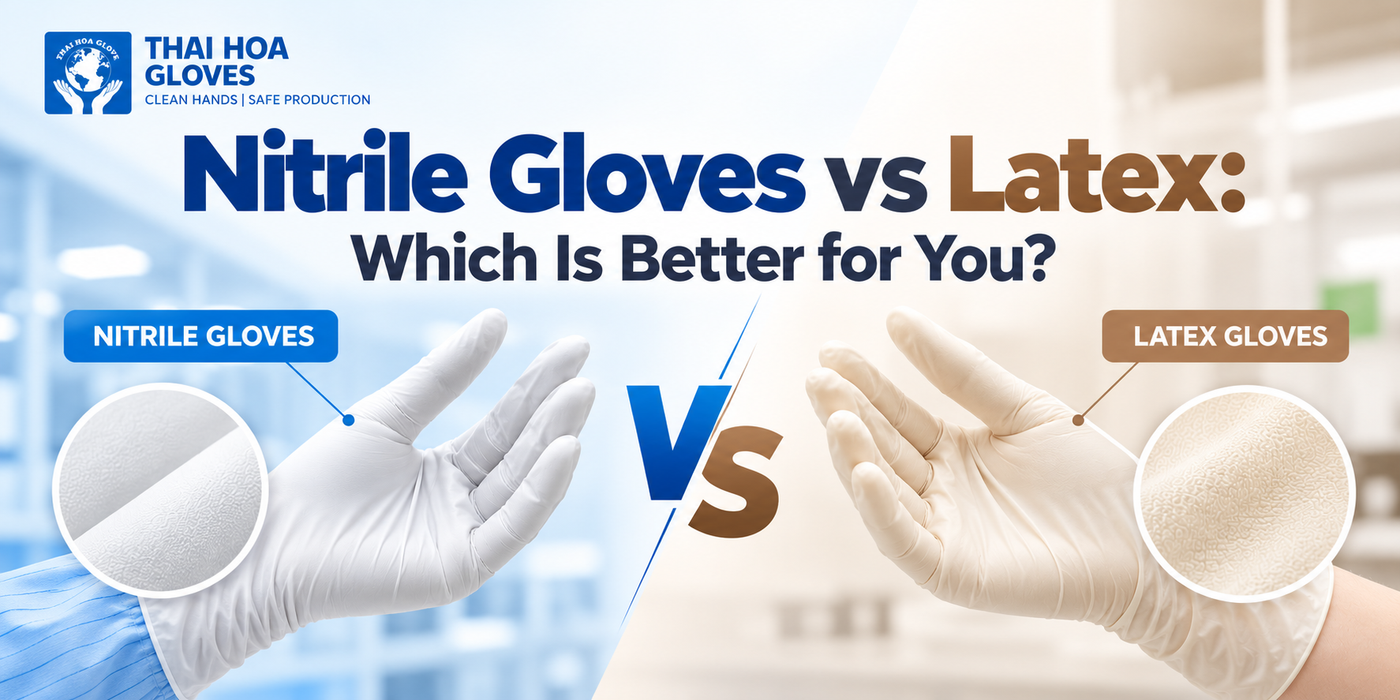
Nitrile avoids natural rubber latex proteins, while latex can offer useful elasticity and fit in appropriate products. Neither material is automatically better for every user or exposure.
These gloves are made from synthetic rubber and can provide a useful barrier while supporting detailed hand movements. Their suitability depends on the specific product, intended use and working conditions; nitrile alone does not establish cleanroom, medical, ESD or chemical-protection performance.
Nitrile and latex address different priorities
Nitrile avoids natural rubber latex proteins, while latex can offer useful elasticity and fit in appropriate products. Neither material is automatically better for every user or exposure.
Compare the actual models for intended use, fit, integrity, chemical data and contamination needs. Consider latex-related sensitivity where relevant and avoid turning a material comparison into an unsupported universal ranking.
What to verify on the product specification
Start with the product code, intended use, size range, cuff length and thickness measurement locations. Color is useful for identification, but it is not a performance rating. Two gloves made from nitrile may use different formulations, surface finishes and packaging, so compare product data rather than material names alone.
Ask for the reports needed by your process and confirm that they relate to the supplied model. A general company certificate does not demonstrate every property claimed for a glove.
Check fit under real working conditions
Trial the glove with the smallest component and most demanding movement used in the task. Look for excess material at the fingertips, tightness between the fingers and cuff movement. Record comfort and glove condition after a representative period rather than relying on the first impression.
Keep the approved specification and sample identification with the purchasing record. Reassess the choice if the task, supplier or formulation changes.
Make the decision repeatable
Record the product code, lot identification, trial conditions and acceptance criteria. Involve the people responsible for the operation, quality and relevant safety controls. A short, repeatable evaluation is more useful than an unsupported claim that one material is always best.
Retain the approved specification and relevant handling instructions. Review the selection when the task, exposure, equipment, packaging or supplier changes, rather than assuming the original approval covers every future use.
Frequently asked questions
Does nitrile mean chemical resistant to everything?
No. Consult product-specific data for the chemical, concentration and exposure conditions.
What should I send when requesting product advice?
Provide the task, required protection and cleanliness criteria, size mix, expected quantity and delivery location. Include actual chemical names and exposure conditions if chemicals are involved.
Does a product description guarantee my process will pass?
No. Product evidence must be checked against the application, and the site’s operating controls remain necessary.
Discuss your glove requirements

For information about Thái Hòa Gloves’ nitrile range, request the current specification, suitable samples and an effective-dated quotation for your application. Confirm availability and shipping terms directly.
WhatsApp: +84 982 832 915. Email: info@thaihoagloves.com. Thái Hòa Gloves product and contact information.
References
Describe the hand movements that matter
For nitrile gloves, fit should be assessed through the work rather than a brief look at the hand. Choose representative movements such as pinching a small part, rotating a tool and reaching for a component. Observe whether excess material gathers at the fingertips or the palm feels restricted. Ask the wearer to identify the exact movement that becomes difficult so the result is useful for selection.
A comparison of nitrile gloves should include the sizes that are realistically available for the workforce. Two people who use the same nominal size may report different fit because their hand proportions differ. Record the model and size with each observation rather than treating all samples as identical. Use that information to build a practical size mix and to identify whether a second configuration needs evaluation.
Separate grip from the feel of the surface
Evaluating nitrile gloves requires more than touching the sample and describing it as rough or smooth. The relevant question is how it handles the actual object under the approved working conditions. A small connector, a larger tool and a smooth container may involve different contact areas. Use safe representative tasks and compare consistent conditions when assessing the effect of surface texture.
For nitrile gloves, record both handling control and the ability to feel or position a small feature. A wearer may find one surface easy to grip but less convenient for a delicate adjustment. Keep these observations separate instead of combining them into a single score without explanation. The useful outcome is a model that meets the operation’s requirements, supported by specific examples of the tasks assessed.
Record where dimensions are measured
When comparing nitrile gloves, identify whether a quoted thickness refers to a fingertip, palm or cuff location. Check the size and measurement basis associated with the value. A single number in a catalogue may not provide enough information to compare two products fairly. Ask for the relevant specification and connect it to the sample used in the trial.
The evaluation of nitrile gloves should treat thickness, fit and flexibility as related but distinct observations. A larger size does not necessarily solve a material stiffness issue, and a thinner sample does not automatically meet every performance requirement. Keep mandatory technical criteria separate from user preferences. Once those criteria are met, the trial can help select a practical balance for the particular task and workforce.
Make the comfort survey specific
A survey concerning these gloves is more useful when it asks about a defined task and duration. Separate fingertip fit, pressure around the palm, cuff behavior and ease of movement. Include a place for the wearer to describe when the issue appears. A general satisfaction rating alone can hide whether a complaint concerns size, handling or the way the glove is dispensed.
For nitrile gloves, collect feedback from more than one representative user and retain the product identities. Avoid interpreting a single preference as a workforce-wide conclusion. If discomfort or a skin concern is reported, use the organization’s appropriate reporting and review process rather than diagnosing it from the survey. The purpose of the record is to support a better product and process decision with understandable observations.
Check cuff behavior during the complete task
An assessment of these gloves should include repeated bending and reaching with the sleeves or garments normally worn. Note whether the cuff rolls, slips or needs adjustment. Check whether the person is stretching the product excessively when putting it on. These details can distinguish a size or donning issue from a feature of the chosen configuration.
When introducing nitrile gloves, explain the approved size options and make them accessible at the dispensing point. People should not have to use an unsuitable size because a preferred pack is empty. Review recurring cuff complaints alongside stock and training records. A change in size distribution or clearer donning guidance may be relevant, but any product substitution should still pass the technical review required for the operation.
Assign ownership to the next practical action
A decision about nitrile gloves often involves purchasing, operations and a technical reviewer. Each team should know what information it owns and what remains unresolved. A short action record can identify the question, the person responsible and the evidence needed to close it. This prevents a sample, a quotation and a specification from progressing independently with different assumptions.
When introducing nitrile gloves, confirm who can approve the product for the named operation and who updates the relevant instructions. Give operators a clear contact for unexpected differences in the supplied item. Keep the communication focused on the actual decision rather than collecting documents without a purpose. Ownership makes the review easier to complete and helps the approved arrangement survive normal staff changes.
Use a practical example before broad introduction
Consider a team evaluating nitrile gloves for an existing operation. A useful first step is to describe one representative task, list its mandatory requirements and identify the configuration currently in use. The team can then review the proposed product against those requirements and plan any appropriate trial. The example is a method for organizing the decision, not evidence that a particular model will perform better.
For nitrile gloves, record what would count as an acceptable result before the comparison starts. Keep the conditions consistent enough to interpret the observations and note any differences that cannot be controlled. After the review, connect the decision to the product identity and the approved task. This provides a repeatable approach when another size, supplier or operating condition needs consideration later.
Make the introduction understandable at the workstation
After approval of nitrile gloves, translate the technical decision into concise operating information. Show the product identity, available sizes, the tasks covered and the relevant handling instructions. Explain where staff should obtain a replacement and how to report a discrepancy. Operators should be able to follow the arrangement without searching through the complete purchasing correspondence.
The introduction of nitrile gloves should also include the people who replenish supplies and receive deliveries. Their records need to use the same product descriptions as the workstation instructions. Check that superseded alternatives are not left beside the approved stock without a clear status. This reduces confusion during busy periods and keeps routine supply aligned with the configuration that was actually assessed.


