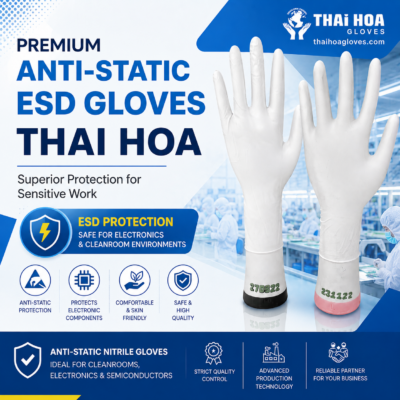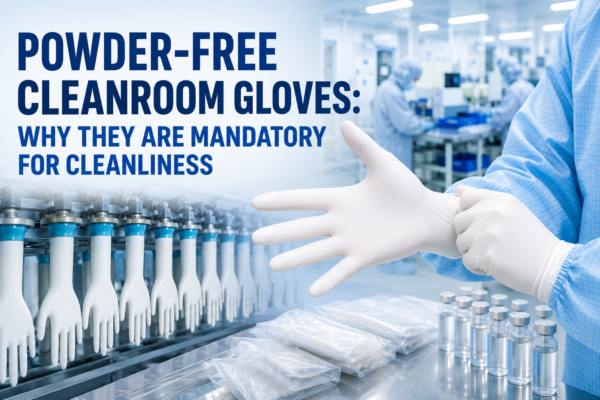


In the hyper-sensitive world of semiconductor fabrication and electronics assembly, the human hand is the greatest source of contamination. A single microscopic dust particle or an invisible electrostatic discharge (ESD) can render a high-value component useless. This is why disposable gloves for electronics are not merely protective gear—they are precision tools designed to maintain the integrity of the micro-environment.
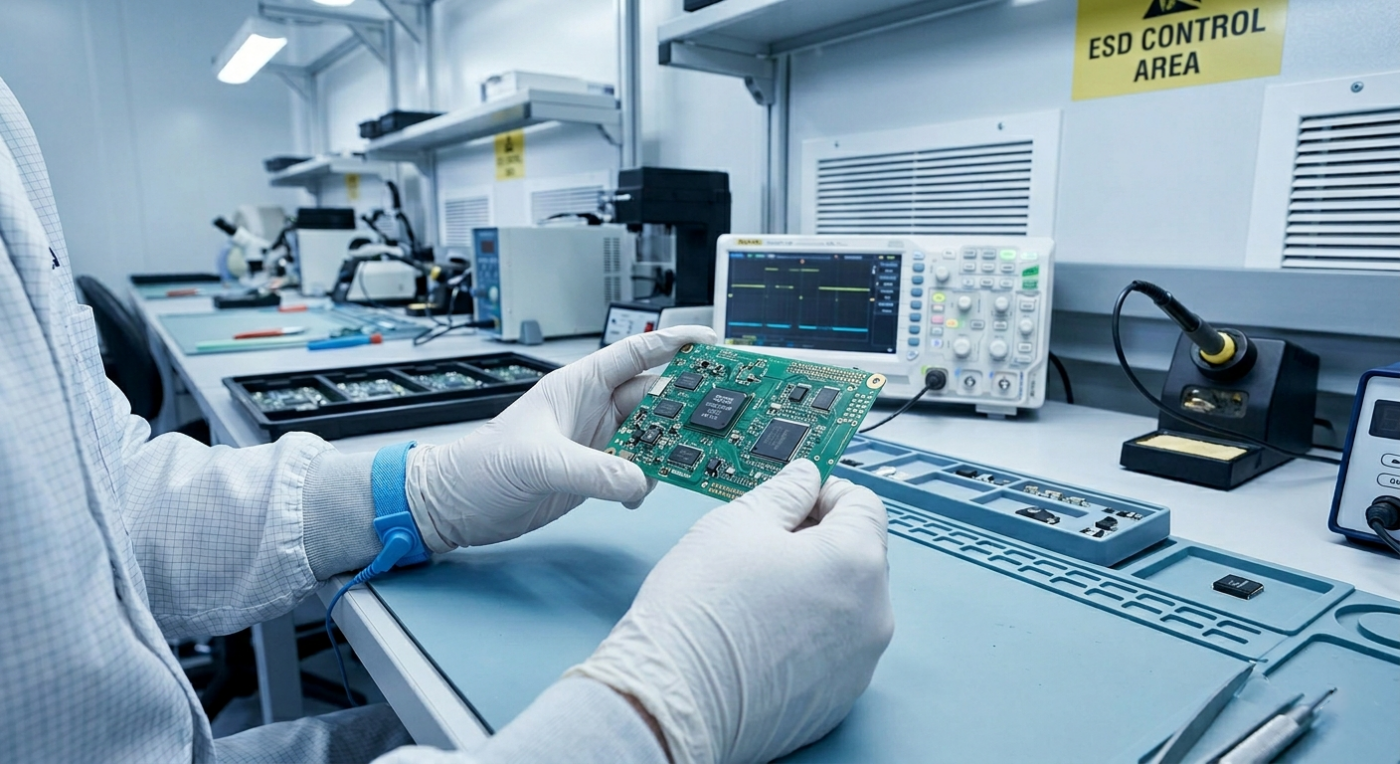
This guide explores the critical roles of ESD protection and particulate control, helping manufacturers select the right hand protection to minimize yield loss.
1. The Hidden Risks of Standard Gloves in Electronics
Many facilities make the mistake of using general-purpose medical or industrial gloves. However, standard gloves often introduce three catastrophic risks to electronic components:
- Static Accumulation: Traditional latex and vinyl are highly insulative. They build up triboelectric charges through friction, which can discharge into a sensitive circuit, causing immediate failure or “latent defects” (failure after the product reaches the customer).
- Particulate Shedding: Low-grade gloves are often coated with cornstarch (powder) or have loose fibers that flake off, landing on silicon wafers or optical lenses.
- Ionic Contamination: Human sweat contains salts like Sodium (Na+) and Potassium (K+). Standard gloves can allow these ions to permeate or may contain sulfur and silicone that corrode delicate metallic traces.
2. ESD Control: Shielding Against the Invisible Spark
ESD (Electrostatic Discharge) is the leading cause of component failure in the electronics industry. To mitigate this, specialized electronics gloves are engineered with specific surface resistance properties.
Understanding Electrical Properties
When sourcing gloves, you will encounter three primary classifications based on their ability to move electrical charges:
| Glove Type | Surface Resistance (Ω) | Typical Application |
| Antistatic | 1010 to 1012 | Low-risk assembly and secondary packaging. |
| Static Dissipative | 106 to 109 | The Industry Standard. Safely bleeds off charges at a controlled rate. |
| Conductive | <106 | Rare for disposables; usually reserved for specialized fabric gloves with carbon fibers. |
Nitrile is the preferred material for ESD-sensitive environments because it is inherently more dissipative than natural rubber latex, which tends to be highly insulative.
3. Particulate Control: Maintaining Cleanroom Standards
Particulate control refers to the glove’s ability to remain “clean” and not shed particles into a controlled environment. This is governed by ISO standards.
The Cleanroom Laundering Process
“Cleanroom-ready” disposable gloves go through a rigorous post-manufacturing process that standard gloves skip:
- Chlorination: A chlorine bath removes surface tackiness and residual proteins, ensuring the glove is powder-free and easy to don.
- DI Water Rinsing: Gloves are washed in ultra-pure deionized (DI) water to strip away surface particles and trace ions.
- Hermetic Packaging: Gloves are packaged in a Class 100 (ISO 5) cleanroom in double-bagged, vacuum-sealed polybags to prevent contamination during transit.
4. Why Nitrile is the King of Electronics Assembly
While Latex and Vinyl are options, Nitrile has become the global benchmark for electronics for several technical reasons:
Chemical Resistance
Electronics manufacturing often involves solvents like Isopropyl Alcohol (IPA) for cleaning. Nitrile offers superior chemical resistance, ensuring the glove doesn’t swell or degrade when it comes into contact with cleaning agents.
Absence of Contaminants
Nitrile gloves are typically Silicone-free and Sulfur-free. Sulfur can react with silver and copper components, causing “silver tarnish,” which ruins electrical conductivity.
Precision and Tactility
Modern nitrile formulations are thinner yet stronger, providing the high level of tactile sensitivity required to handle 0201-sized surface-mount devices (SMDs) or delicate gold bonding wires.
5. Critical Standards to Look For
To ensure your supply chain meets international quality benchmarks, look for the following certifications on the technical data sheet (TDS):
- ANSI/ESD S20.20: Ensures the product is part of a verified ESD control program.
- ASTM D6319: Standard specification for nitrile examination gloves for medical application (often used as a baseline for durability).
- IEST-RP-CC005: The specific “Recommended Practice” for testing gloves used in cleanrooms and other controlled environments.
6. Best Practices for Implementing Glove Protocols
Choosing the right glove is only half the battle; proper protocol ensures they perform as intended.
- Double Gloving: In ultra-clean environments (ISO 5 or lower), operators often double-glove to provide an extra layer of protection and allow for the outer glove to be changed frequently without exposing the skin.
- Proper Donning: Operators should only touch the cuff of the glove. Touching the fingertips during the donning process can transfer skin oils to the most critical part of the glove.
- Frequency of Change: Even the best ESD gloves lose some effectiveness as they become soiled with flux residues or skin oils. Establish a mandatory change interval (e.g., every 2 hours).
7. Conclusion: Investing in Quality Yields
In the world of electronics, the cost of a single pair of high-quality ESD-safe nitrile gloves is negligible compared to the cost of a scrapped batch of microchips. By prioritizing particulate control and static dissipation, manufacturers protect their bottom line and ensure the long-term reliability of their devices.
Whether you are assembling consumer smartphones or aerospace-grade sensors, the right disposable glove is your first line of defense against the microscopic forces that threaten modern technology.