

Introduction
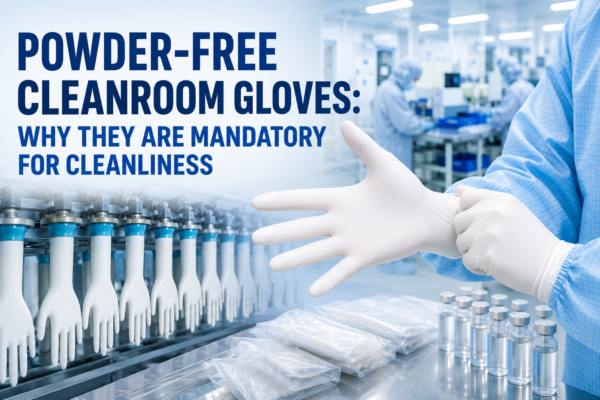
In cleanroom environments, even the smallest contamination can compromise product quality, reduce manufacturing efficiency, and lead to costly production losses. From semiconductor fabrication and electronics assembly to pharmaceutical manufacturing and biotechnology research, maintaining a controlled environment is essential.
One critical component of contamination control is the proper selection of cleanroom gloves. These gloves serve as a barrier between personnel and sensitive products, helping prevent the transfer of particles, microorganisms, oils, and other contaminants.
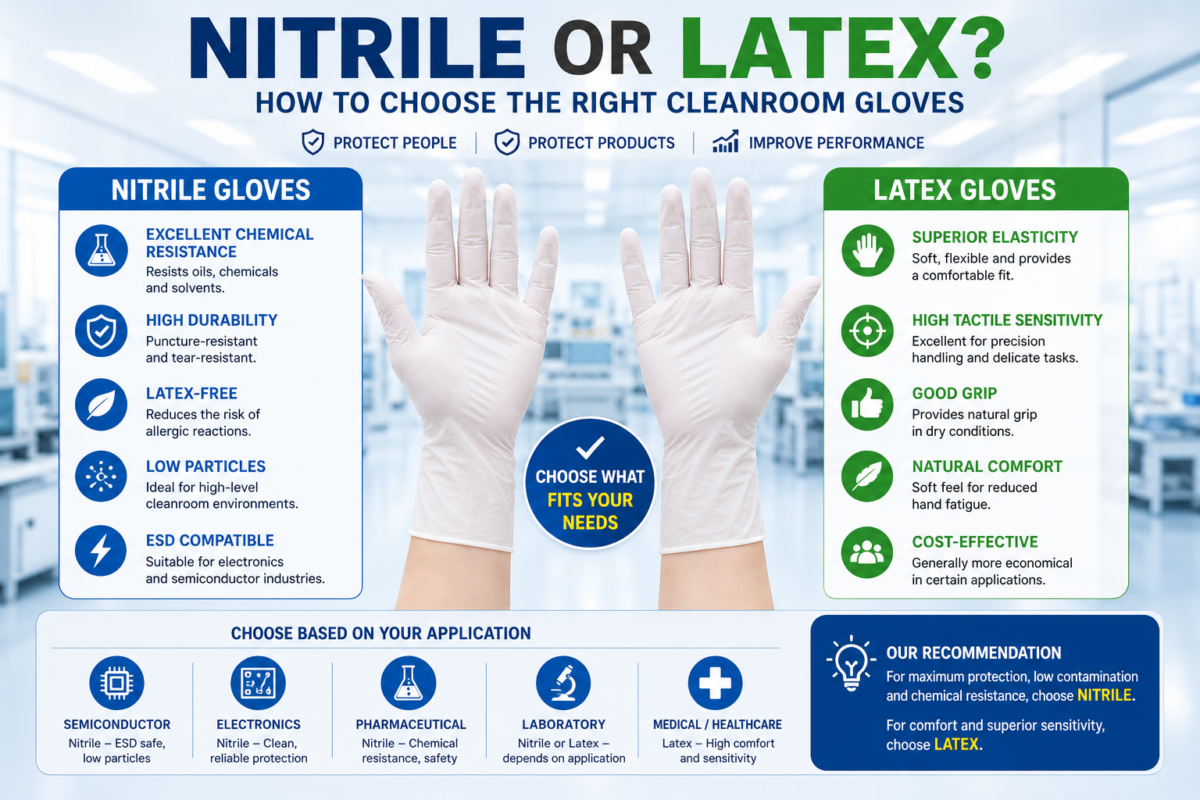
Among the most commonly used cleanroom gloves are nitrile gloves and latex gloves. While both offer protection and comfort, they differ significantly in terms of chemical resistance, durability, cleanliness, and user safety.
This guide explains the key differences between nitrile and latex cleanroom gloves and helps you choose the right option for your cleanroom application.
Why Cleanroom Gloves Matter
Cleanroom gloves are designed specifically for controlled environments where contamination control is a top priority. Unlike standard disposable gloves, cleanroom gloves undergo specialized manufacturing, washing, and packaging processes to reduce particle generation and ionic contamination.
Their primary functions include:
- Preventing contamination from human skin
- Protecting sensitive products and components
- Maintaining cleanroom compliance
- Improving worker safety
- Reducing defect rates
Selecting the wrong glove can introduce contaminants into the production process and negatively impact product quality.
Understanding Nitrile Cleanroom Gloves
Nitrile gloves are made from synthetic rubber and have become the preferred choice in many modern cleanroom environments.
Key Characteristics of Nitrile Gloves
Nitrile gloves offer:
- Excellent puncture resistance
- Strong chemical resistance
- Low particle generation
- Latex-free construction
- High durability
- Good tactile sensitivity
Because they do not contain natural rubber proteins, nitrile gloves eliminate the risk of latex-related allergic reactions.
Advantages of Nitrile Gloves in Cleanrooms
Superior Chemical Resistance
Many manufacturing and laboratory environments involve exposure to chemicals, solvents, oils, and cleaning agents.
Nitrile gloves provide excellent protection against:
- Alcohols
- Cleaning solutions
- Greases
- Oils
- Certain solvents
This makes them ideal for pharmaceutical production, electronics manufacturing, and laboratory applications.
Lower Risk of Allergic Reactions
Latex allergies can affect both workers and end-users.
Nitrile gloves are:
- Latex-free
- Hypoallergenic
- Safe for sensitive skin
As workplace safety regulations continue to evolve, many organizations have transitioned to nitrile gloves to eliminate allergy-related concerns.
Better Durability
Compared to latex gloves, nitrile gloves generally offer greater resistance to:
- Tears
- Punctures
- Abrasion
- Mechanical stress
This durability can reduce glove consumption and improve operational efficiency.
Ideal for Semiconductor and Electronics Industries
Semiconductor and electronics manufacturing require gloves with exceptional cleanliness and contamination control.
Cleanroom nitrile gloves often feature:
- Low particle counts
- Low ionic contamination
- ESD compatibility
- Textured fingertips for enhanced grip
These characteristics make nitrile the preferred glove material in many ISO-certified cleanroom environments.
Understanding Latex Cleanroom Gloves
Latex gloves are made from natural rubber and have been used in cleanrooms for decades.
Known for their flexibility and comfort, latex gloves continue to be used in specific applications where tactile sensitivity is a priority.
Key Characteristics of Latex Gloves
Latex gloves provide:
- Excellent elasticity
- Superior fit
- High tactile sensitivity
- Comfortable wear
- Strong grip characteristics
Because latex conforms closely to the hand, many users appreciate its natural feel.
Advantages of Latex Gloves in Cleanrooms
Exceptional Comfort
Latex gloves offer excellent flexibility and comfort, making them suitable for extended use.
Workers performing repetitive tasks often appreciate the natural elasticity of latex material.
High Tactile Sensitivity
For tasks requiring delicate handling and precision, latex gloves can provide outstanding touch sensitivity.
Applications may include:
- Medical procedures
- Laboratory analysis
- Precision assembly work
Secure Fit
Latex naturally conforms to hand contours, providing a snug fit that supports dexterity and control.
Nitrile vs. Latex: Key Comparison Factors
When choosing between nitrile and latex cleanroom gloves, several important factors should be evaluated.
1. Contamination Control
Cleanroom environments demand strict contamination control standards.
Nitrile
Advantages:
- Low particle generation
- Low extractable contaminants
- Excellent cleanroom compatibility
Latex
Advantages:
- Available in cleanroom grades
Limitations:
- Natural proteins may present contamination concerns in certain environments
Winner: Nitrile
2. Chemical Resistance
Chemical protection is essential in many cleanroom operations.
Nitrile
Excellent resistance to:
- Oils
- Greases
- Cleaning agents
- Numerous chemicals
Latex
Moderate resistance but generally less effective against oils and solvents.
Winner: Nitrile
3. Durability
Glove durability affects both protection and operating costs.
Nitrile
- High puncture resistance
- Strong tear resistance
- Longer service life
Latex
- Good elasticity
- More susceptible to punctures
Winner: Nitrile
4. Comfort and Flexibility
Worker comfort directly impacts productivity.
Nitrile
- Comfortable fit
- Improved flexibility in modern formulations
Latex
- Exceptional elasticity
- Natural feel
Winner: Latex
5. Allergy Concerns
Employee safety is a critical consideration.
Nitrile
- Latex-free
- Hypoallergenic
Latex
- May trigger allergic reactions in sensitive individuals
Winner: Nitrile
6. Cost Considerations
Pricing can vary depending on market conditions and glove specifications.
Historically:
- Latex gloves were often less expensive
- Nitrile gloves have become increasingly cost-competitive
Organizations should evaluate total cost rather than purchase price alone, considering durability and replacement frequency.
Which Industries Prefer Nitrile Gloves?
Today, nitrile gloves dominate many cleanroom sectors due to their balance of safety, cleanliness, and durability.
Semiconductor Manufacturing
Semiconductor facilities require:
- Ultra-low contamination
- High precision handling
- ESD control
Nitrile gloves are often the preferred solution because they support strict cleanroom standards.
Electronics Assembly
Workers handling:
- Printed circuit boards
- Microchips
- Connectors
- Sensors
benefit from the durability and contamination control provided by nitrile gloves.
Pharmaceutical Manufacturing
Pharmaceutical companies frequently select nitrile gloves because of:
- Chemical resistance
- Product protection
- Reduced allergy risks
Biotechnology Laboratories
Research environments often involve chemical exposure and contamination-sensitive processes, making nitrile gloves an excellent choice.
When Are Latex Gloves Still Appropriate?
Although nitrile gloves have become increasingly popular, latex gloves remain useful in certain situations.
Latex may be suitable when:
- Maximum tactile sensitivity is required
- Chemical exposure is minimal
- No latex allergy concerns exist
- Comfort is the primary consideration
Some laboratory and medical professionals continue to prefer latex gloves for highly delicate tasks.
Factors to Consider Before Purchasing Cleanroom Gloves
Before selecting cleanroom gloves, organizations should assess:
Cleanroom Classification
Different environments require different cleanliness standards.
Consider:
- ISO Class requirements
- Particle limits
- Regulatory standards
Application Requirements
Evaluate:
- Chemical exposure
- Product sensitivity
- Tool handling needs
- Precision requirements
Employee Safety
Choose gloves that minimize:
- Allergic reactions
- Hand fatigue
- Workplace injuries
Compliance Standards
Verify that gloves meet applicable requirements for:
- Cleanroom use
- Pharmaceutical manufacturing
- Electronics production
- Semiconductor processing
Why Nitrile Has Become the Industry Standard
Over the past decade, nitrile technology has advanced significantly.
Modern cleanroom nitrile gloves now offer:
- Improved comfort
- Enhanced elasticity
- Better tactile sensitivity
- Superior durability
- Outstanding contamination control
These improvements have allowed nitrile gloves to address many traditional advantages once associated exclusively with latex gloves.
As a result, many organizations now standardize nitrile gloves across their facilities to simplify inventory management and improve worker safety.
Conclusion
Choosing the right cleanroom gloves is essential for maintaining product quality, protecting employees, and ensuring compliance with contamination-control standards.
While latex gloves continue to provide exceptional comfort and tactile sensitivity, nitrile gloves have emerged as the preferred choice for most modern cleanroom environments due to their superior chemical resistance, durability, cleanliness, and latex-free safety.
For industries such as semiconductor manufacturing, electronics assembly, pharmaceuticals, biotechnology, and advanced laboratories, cleanroom nitrile gloves often provide the best balance of protection, performance, and reliability.
By carefully evaluating your cleanroom requirements, contamination risks, and operational needs, you can select the glove material that best supports your production goals and quality standards.