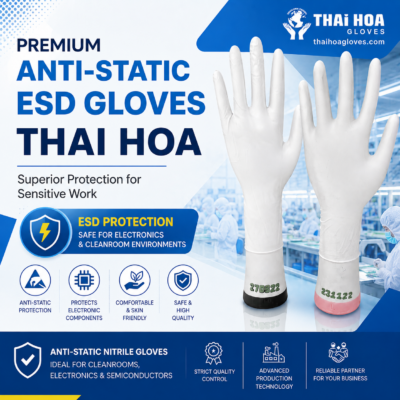


What Are Anti-Static Nitrile Gloves?
In today’s electronics manufacturing industry, electrostatic discharge (ESD) control is one of the most critical factors in protecting sensitive components and ensuring product quality. Even a small electrostatic discharge can damage microchips, semiconductors, printed circuit boards, and other electronic components. Therefore, anti-static nitrile gloves have become an essential piece of personal protective equipment (PPE) in electronics manufacturing facilities, cleanrooms, and assembly lines.
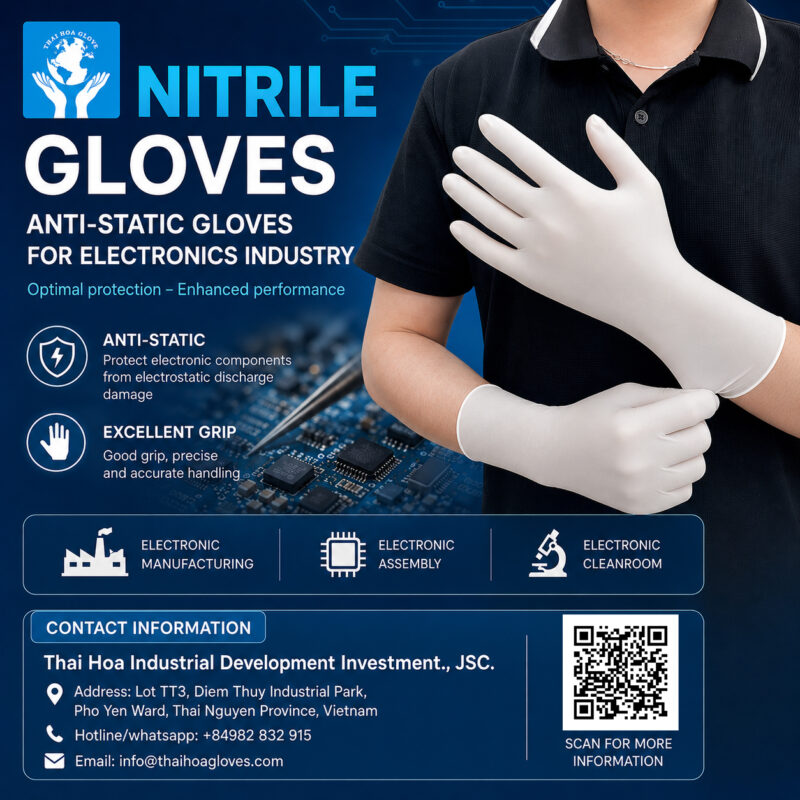
Anti-static nitrile gloves are made from Nitrile Butadiene Rubber (NBR), a synthetic rubber known for its durability, flexibility, and chemical resistance. Designed with ESD-safe properties, these gloves help dissipate static electricity and minimize the risk of electrostatic discharge that could damage sensitive electronic devices.
Why Does the Electronics Industry Need Anti-Static Gloves?
Electronic components are becoming increasingly smaller and more sensitive to electrostatic discharge. A static charge that is harmless to humans can cause severe damage to delicate electronic parts.
Risks of Static Electricity
Static electricity can be generated through:
- Friction between clothing and the body.
- Contact between workers and chairs or flooring.
- Handling different materials.
- Low-humidity environments.
When static charges accumulate, they may discharge suddenly and negatively affect electronic components.
Consequences of Electrostatic Discharge
Electrostatic discharge can:
- Damage microchips and semiconductor devices.
- Cause product failures during manufacturing.
- Reduce the lifespan of electronic products.
- Increase defect rates and production costs.
- Affect customer satisfaction and company reputation.
Using anti-static nitrile gloves is an effective way to reduce these risks and maintain product reliability.
Key Features of Anti-Static Nitrile Gloves
Excellent ESD Protection
The primary advantage of anti-static nitrile gloves is their ability to control and dissipate static electricity, protecting sensitive electronic components from electrostatic discharge.
Superior Durability
Compared to traditional latex gloves, nitrile gloves offer higher puncture resistance and tear strength, making them ideal for demanding industrial applications.
Enhanced Grip Performance
The textured surface provides excellent grip, allowing operators to handle small electronic parts with precision and confidence.
Latex-Free Material
Nitrile gloves do not contain natural latex proteins, reducing the risk of allergic reactions and skin irritation among workers.
Comfortable Fit
Designed to fit snugly around the hand, nitrile gloves offer excellent flexibility and tactile sensitivity, making them suitable for delicate assembly tasks.
Applications of Anti-Static Nitrile Gloves in Electronics Manufacturing
Electronic Component Manufacturing
Widely used in the production of:
- Semiconductor chips
- Integrated circuits (ICs)
- Printed circuit boards (PCBs)
- Sensors and electronic modules
Electronics Assembly Lines
Suitable for assembling:
- Smartphones
- Computers and laptops
- Telecommunications equipment
- Cameras
- IoT devices
Electronic Cleanrooms
In cleanroom environments, anti-static nitrile gloves help minimize contamination while preventing static buildup.
Quality Inspection and Testing
Quality control (QC) and quality assurance (QA) personnel frequently handle sensitive electronic components and require ESD-safe gloves for optimal protection.
Benefits of Using Anti-Static Nitrile Gloves
Protect Sensitive Components
The gloves reduce the risk of electrostatic discharge, helping to prevent costly damage to electronic parts.
Improve Product Quality
Lower defect rates lead to higher manufacturing efficiency and better customer satisfaction.
Increase Productivity
The ergonomic design allows workers to perform precise tasks comfortably and efficiently.
Meet ESD Compliance Requirements
Anti-static nitrile gloves help companies comply with ESD control standards commonly required in electronics manufacturing.
Reduce Operational Costs
By minimizing product defects and failures, businesses can significantly reduce repair, replacement, and warranty costs.
How to Choose the Right Anti-Static Nitrile Gloves
Select the Proper Size
Common sizes include:
- Small (S)
- Medium (M)
- Large (L)
Properly fitted gloves improve comfort and dexterity.
Verify ESD Performance
Choose gloves that meet the required surface resistance and ESD specifications for your manufacturing environment.
Buy from a Reliable Supplier
Ensure the gloves are sourced from reputable manufacturers with strict quality control processes.
Consider Cleanroom Compatibility
For cleanroom applications, select gloves that meet Class 100 or Class 1000 cleanroom standards, depending on your operational requirements.
Best Practices for Using Anti-Static Nitrile Gloves
To maximize protection and performance:
- Wash and dry hands before wearing gloves.
- Inspect gloves for damage before use.
- Wear gloves correctly to avoid tearing.
- Replace damaged gloves immediately.
- Change gloves regularly according to workplace procedures.
- Use gloves together with other ESD protection equipment such as wrist straps, ESD footwear, and anti-static mats.
Where to Buy Anti-Static Nitrile Gloves?
Many electronics manufacturers choose specialized suppliers of cleanroom gloves and ESD products to ensure consistent quality and performance.
When selecting a supplier, consider:
- Certified product quality
- Reliable manufacturing standards
- Competitive pricing
- Technical support services
- Stable supply capacity
Conclusion
Anti-static nitrile gloves are an essential solution for protecting sensitive electronic components from electrostatic discharge during manufacturing, assembly, and inspection processes. With excellent ESD protection, durability, grip performance, and user comfort, these gloves are widely used in electronics factories, cleanrooms, and quality control environments.
Investing in high-quality anti-static nitrile gloves not only helps prevent costly product failures but also improves production efficiency, product quality, and overall business competitiveness in the electronics industry.