

Introduction
In industries where even microscopic contamination can compromise product quality, powder-free cleanroom gloves have become an essential part of contamination control. From semiconductor manufacturing and electronics assembly to pharmaceuticals, biotechnology, and medical device production, maintaining an ultra-clean environment is non-negotiable.
Unlike traditional powdered gloves, powder-free cleanroom gloves are specifically designed to minimize particles, ionic contaminants, and extractable residues that could negatively impact sensitive manufacturing processes. Their use is no longer considered optional in modern cleanroom operations—it is a mandatory requirement for organizations committed to quality, compliance, and operational excellence.
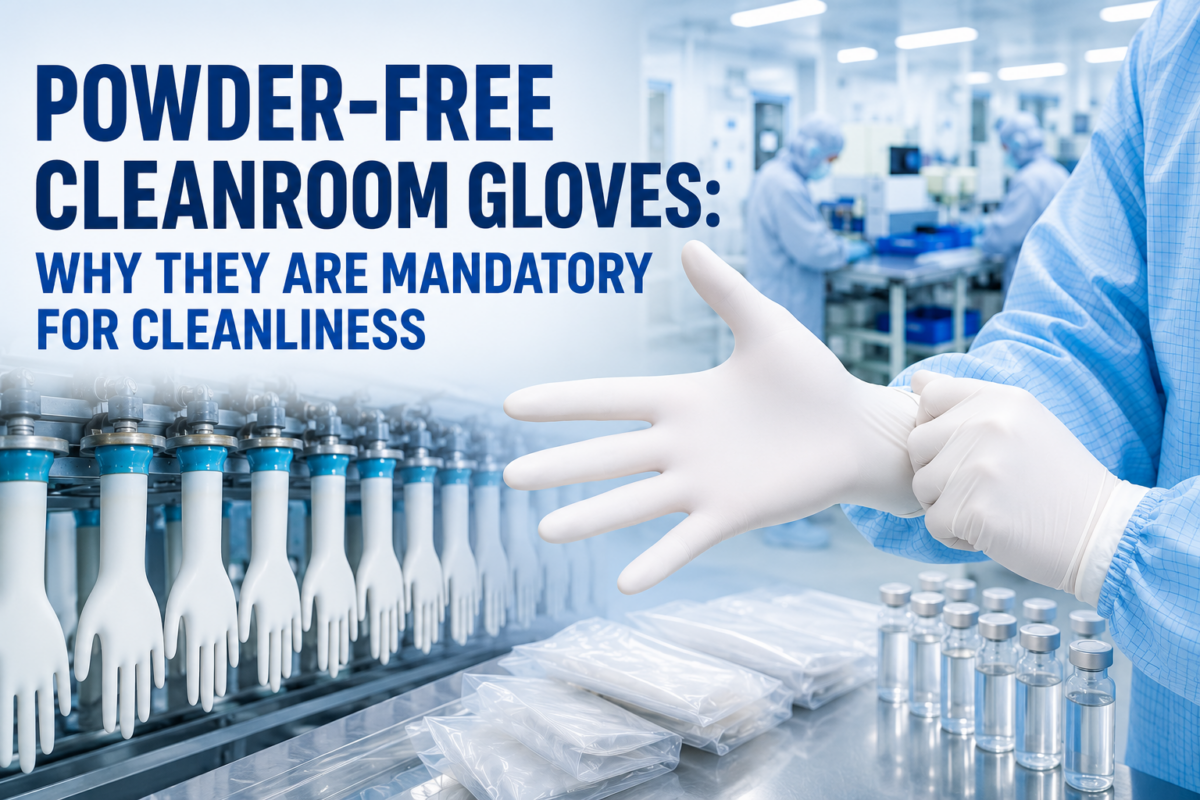
This article explains why powder-free cleanroom gloves are indispensable, how they contribute to contamination control, and why manufacturers worldwide are switching to high-quality nitrile cleanroom gloves for their production environments.
What Are Powder-Free Cleanroom Gloves?
Powder-free cleanroom gloves are disposable gloves manufactured without cornstarch or any other donning powder. They undergo specialized washing and cleaning processes to remove:
- Powder residue
- Surface particles
- Ionic contaminants
- Organic residues
- Extractable chemicals
Unlike conventional disposable gloves, cleanroom gloves are produced under strict quality control systems and packaged in controlled environments to ensure extremely low particle generation.
Most powder-free cleanroom gloves are manufactured from 100% nitrile, making them suitable for industries requiring high cleanliness and excellent chemical resistance.
Why Powder Is a Serious Contamination Risk
Years ago, powdered gloves were widely used because the powder made them easier to put on. However, modern manufacturing has proven that glove powder introduces significant contamination risks.
Particle Contamination
Powder particles can become airborne during glove use.
These particles may settle on:
- Semiconductor wafers
- Printed circuit boards
- Optical lenses
- Medical devices
- Pharmaceutical products
Even microscopic particles can lead to production defects and product rejection.
Cross Contamination
Powder easily transfers from gloves to:
- Equipment
- Components
- Packaging materials
- Workstations
This increases the possibility of contamination throughout the manufacturing process.
Equipment Damage
In electronics manufacturing, powder residue can interfere with:
- Precision sensors
- Connectors
- Electronic contacts
- Microchips
Accumulated powder may also reduce equipment efficiency and increase maintenance costs.
Product Quality Issues
Powder contamination can result in:
- Surface defects
- Adhesion failures
- Coating imperfections
- Optical contamination
- Electrical failures
For manufacturers pursuing Six Sigma or zero-defect production, powdered gloves represent an unnecessary risk.
Why Powder-Free Gloves Are Mandatory in Cleanrooms
Superior Contamination Control
The primary objective of every cleanroom is contamination prevention.
Powder-free gloves eliminate one of the largest sources of airborne particles, helping facilities maintain their required cleanroom classifications.
This is especially important in:
- ISO Class 3
- ISO Class 4
- ISO Class 5
- ISO Class 6
- ISO Class 7
- ISO Class 8 cleanrooms
Lower Particle Generation
Modern powder-free nitrile gloves undergo multiple washing cycles that significantly reduce:
- Non-volatile residue
- Sodium ions
- Chloride ions
- Potassium ions
- Silicone contamination
The result is a glove with exceptionally low particle emission.
Better Product Protection
Powder-free gloves help protect sensitive products by preventing contamination during handling.
Industries benefiting include:
- Semiconductor manufacturing
- PCB assembly
- Lithium battery production
- Pharmaceutical filling
- Biotechnology laboratories
- Precision optics
Compliance with International Standards
Many global manufacturers require powder-free gloves to comply with quality management systems and cleanroom protocols.
Using powder-free cleanroom gloves helps organizations meet customer requirements while supporting international manufacturing standards.
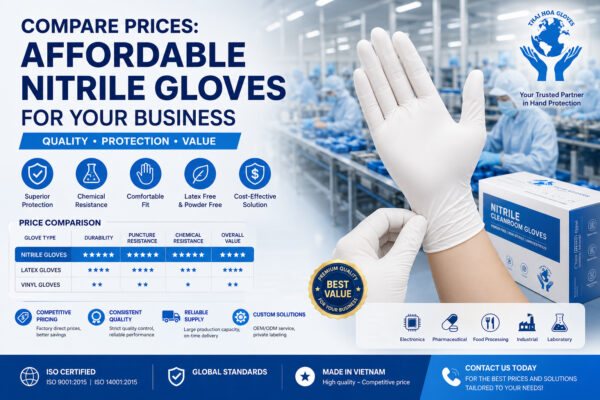
Benefits of Powder-Free Nitrile Cleanroom Gloves
Excellent Chemical Resistance
Nitrile provides superior protection against:
- Oils
- Grease
- Alcohol
- Cleaning agents
- Solvents
- Mild acids
- Alkalis
This makes nitrile ideal for industrial cleanrooms.
Latex-Free Protection
Unlike natural rubber gloves, nitrile gloves contain no latex proteins.
Benefits include:
- Reduced allergy risks
- Improved worker safety
- Better long-term comfort
Outstanding Mechanical Strength
High-quality nitrile gloves offer:
- High tensile strength
- Excellent puncture resistance
- Superior tear resistance
- Long service life
This reduces glove replacement frequency during production.
Excellent Tactile Sensitivity
Modern powder-free cleanroom gloves provide excellent fingertip sensitivity.
Operators can perform:
- Precision assembly
- Microelectronics handling
- Optical inspection
- Laboratory testing
without sacrificing dexterity.
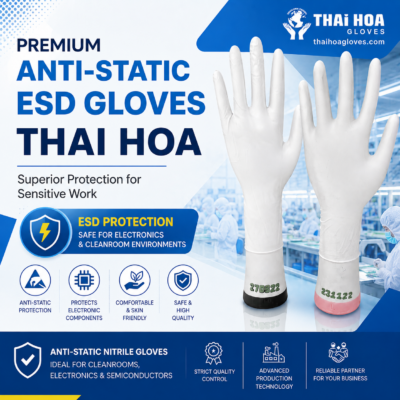
Powder-Free Gloves and ESD Protection
Electrostatic discharge (ESD) is a major concern in electronics manufacturing.
High-quality powder-free cleanroom gloves designed for ESD environments help minimize static electricity generation while protecting sensitive electronic components.
Combined with:
- ESD garments
- Grounding systems
- Conductive flooring
- Wrist straps
- Ionizers
powder-free gloves become an important part of a complete ESD control program.
Applications of Powder-Free Cleanroom Gloves
Semiconductor Industry
Semiconductor production requires extremely low contamination levels.
Powder-free gloves protect:
- Silicon wafers
- IC chips
- Memory devices
- Sensors
from particle contamination.
Electronics Manufacturing
Electronics assembly demands clean handling to prevent:
- Short circuits
- Dust contamination
- Fingerprint residue
- Electrostatic damage
Powder-free nitrile gloves are the preferred solution.
Pharmaceutical Manufacturing
Pharmaceutical production requires sterile and contamination-controlled environments.
Powder-free gloves help ensure:
- Product purity
- Regulatory compliance
- Safe manufacturing
Medical Device Manufacturing
Medical devices require strict cleanliness throughout production.
Powder-free gloves reduce contamination during:
- Assembly
- Inspection
- Packaging
Biotechnology Laboratories
Researchers handling biological materials depend on powder-free gloves to minimize contamination risks while maintaining precision.
Features of High-Quality Cleanroom Gloves
When selecting cleanroom gloves, manufacturers should evaluate several important characteristics.
Low Particle Levels
Quality gloves release minimal airborne particles during use.
Low Ionic Contamination
Reduced sodium, chloride, potassium, and ammonium levels improve product cleanliness.
Powder-Free Design
No donning powder means significantly lower contamination risks.
Silicone-Free
Silicone contamination can affect coatings and optical manufacturing.
High-quality gloves are often silicone-free.
Textured Fingertips
Textured fingertips improve grip while handling delicate components.
Comfortable Fit
Ergonomic design reduces hand fatigue during extended use.
Choosing the Right Powder-Free Cleanroom Gloves
Selecting the appropriate glove depends on your production environment.
Important considerations include:
Cleanroom Classification
Different cleanroom classes require different contamination levels.
Always choose gloves validated for your cleanroom classification.
Material
Nitrile remains the preferred material because it offers:
- Excellent chemical resistance
- High durability
- Latex-free protection
- Superior comfort
Thickness
The appropriate glove thickness depends on the application.
Typical options include:
- 4.0 mil
- 5.5 mil
- 6.0 mil
Thicker gloves generally provide greater durability, while thinner gloves improve tactile sensitivity.
Surface Finish
Textured fingertips improve handling of:
- Small components
- Glass
- Electronic parts
- Precision instruments
Why Manufacturers Choose Thai Hoa Cleanroom Gloves
As a trusted cleanroom glove manufacturer in Vietnam, Thai Hoa supplies premium powder-free nitrile gloves designed for contamination-sensitive industries.
Key advantages include:
- 100% powder-free nitrile construction
- Latex-free formulation
- Low particle generation
- Excellent ESD compatibility
- High puncture resistance
- Comfortable ergonomic design
- Consistent production quality
- Stable supply capacity
Thai Hoa’s advanced manufacturing processes help ensure every glove meets demanding industrial requirements while supporting productivity and product protection.
Best Practices for Using Powder-Free Cleanroom Gloves
To maximize cleanliness and glove performance:
- Wash and dry hands before donning gloves.
- Inspect gloves for defects before use.
- Replace damaged gloves immediately.
- Avoid touching non-cleanroom surfaces.
- Change gloves regularly during production.
- Store gloves in a clean, dry environment.
- Follow cleanroom gowning procedures.
Proper glove handling is just as important as selecting the right glove.
The Future of Powder-Free Cleanroom Gloves
As semiconductor fabrication, electric vehicle production, advanced medical devices, and biotechnology continue to expand, contamination control standards will become even more stringent.
Future developments include:
- Lower particle-emission technologies
- Enhanced ESD performance
- Improved chemical resistance
- Greater wearing comfort
- Sustainable manufacturing processes
- Advanced cleanroom packaging
Manufacturers investing in premium powder-free cleanroom gloves today are better positioned to meet future industry demands.
Conclusion
Powder-free cleanroom gloves are far more than a standard piece of personal protective equipment—they are a critical component of contamination control in modern manufacturing. By eliminating powder-related contamination, reducing particle generation, and protecting sensitive products, these gloves help maintain cleanroom integrity while supporting consistent product quality.
Whether in semiconductor fabrication, electronics assembly, pharmaceutical manufacturing, or biotechnology research, powder-free nitrile gloves have become the industry standard for cleanliness, safety, and operational efficiency.
Choosing a reliable manufacturer such as Thai Hoa ensures a stable supply of high-quality cleanroom gloves engineered to meet international standards and the demanding requirements of advanced production environments.