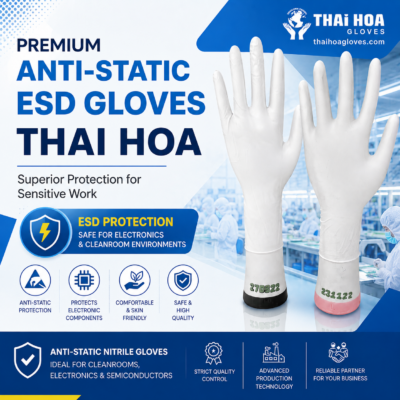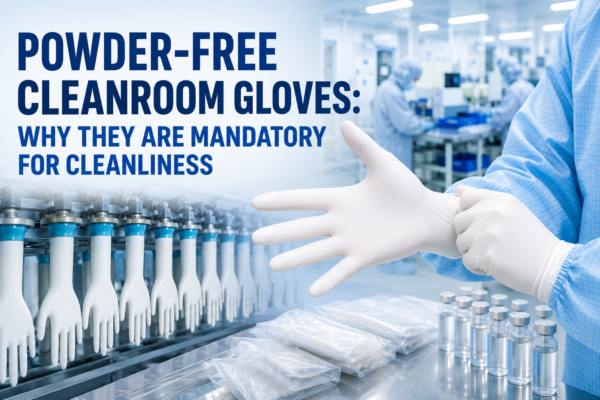


In industries where contamination control is critical, selecting the right cleanroom gloves supplier is just as important as choosing the gloves themselves. Whether you operate in semiconductor manufacturing, electronics assembly, pharmaceuticals, biotechnology, or medical device production, high-quality cleanroom gloves play a vital role in protecting products, processes, and personnel.
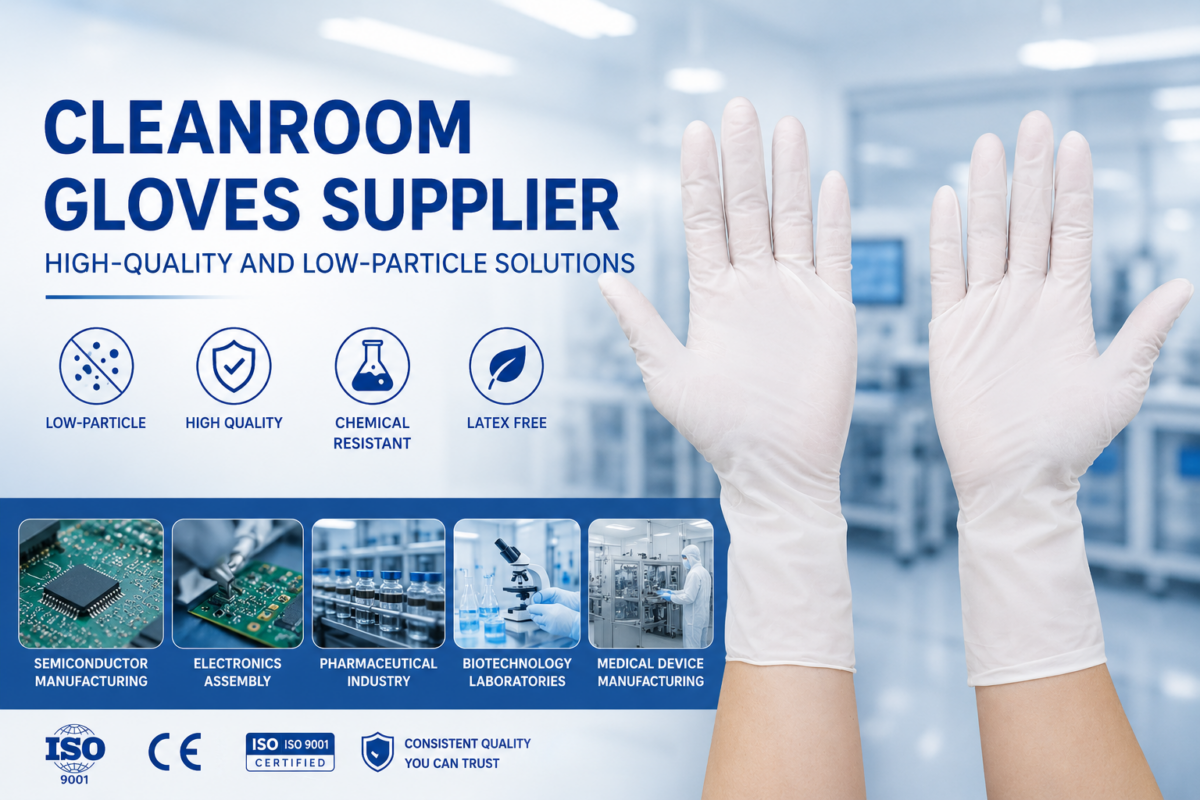
Among the various options available today, nitrile cleanroom gloves have become the preferred choice due to their exceptional cleanliness, chemical resistance, durability, and low particle generation. Partnering with a reliable cleanroom gloves supplier ensures consistent product quality, regulatory compliance, and uninterrupted production.
This comprehensive guide explores why choosing a trusted cleanroom gloves supplier matters and how high-quality, low-particle gloves can improve operational efficiency while minimizing contamination risks.
What Are Cleanroom Gloves?
Cleanroom gloves are specially manufactured disposable gloves designed for environments where airborne particles, microorganisms, and electrostatic discharge (ESD) must be carefully controlled.
Unlike conventional disposable gloves, cleanroom gloves undergo additional processing such as:
- Thorough washing and rinsing
- Low-particle manufacturing
- Strict quality inspection
- Double packaging for contamination prevention
- Cleanroom-compatible packaging
- Particle and ionic contamination testing
These gloves are commonly used in ISO-certified cleanrooms ranging from ISO Class 3 to ISO Class 8 depending on industry requirements.
Why Choosing the Right Cleanroom Gloves Supplier Matters
Many companies focus primarily on glove pricing. However, selecting an experienced cleanroom gloves supplier provides benefits that extend far beyond cost savings.
A reputable supplier ensures:
- Consistent glove quality
- Stable production capacity
- International certifications
- Reliable lead times
- Technical support
- Custom packaging options
- Competitive pricing for bulk orders
Poor-quality gloves can result in contamination, product defects, production delays, and increased operational costs.
Features of High-Quality Cleanroom Gloves
A professional cleanroom gloves supplier should offer products with the following characteristics.
Low Particle Generation
Particle contamination is one of the biggest challenges in cleanroom manufacturing.
Premium nitrile cleanroom gloves are designed to minimize:
- Airborne particles
- Fiber shedding
- Surface residues
- Silicone contamination
- Powder contamination
Low-particle gloves help protect sensitive components from contamination during handling.
Powder-Free Design
Modern cleanroom gloves are manufactured without powder.
Powder-free gloves eliminate:
- Cornstarch residue
- Airborne contaminants
- Product surface contamination
- Cleaning difficulties
This makes them ideal for:
- Semiconductor fabrication
- Optical manufacturing
- Electronics assembly
- Pharmaceutical production
Excellent Chemical Resistance
Nitrile gloves provide outstanding resistance against many chemicals commonly used in manufacturing environments.
They offer protection from:
- Alcohols
- Cleaning agents
- Acids
- Alkalis
- Oils
- Greases
- Solvents
This reduces both operator exposure and product contamination.
Superior Mechanical Strength
Compared with latex or vinyl gloves, nitrile gloves provide:
- Higher puncture resistance
- Better tear resistance
- Greater tensile strength
- Improved durability
Durable gloves reduce replacement frequency and improve productivity.
Latex-Free Material
Latex allergies remain a concern for many workers.
Nitrile gloves eliminate the risks associated with natural rubber latex proteins while maintaining excellent flexibility and comfort.
Comfortable Fit
Operators working long shifts require gloves that reduce hand fatigue.
High-quality cleanroom gloves feature:
- Ergonomic finger design
- Soft nitrile formulation
- Excellent tactile sensitivity
- Comfortable wrist cuffs
- Secure grip
Comfort improves productivity and reduces operator errors.
Low-Particle Technology: Why It Matters
Every microscopic particle introduced into a cleanroom has the potential to damage products.
For example:
In semiconductor manufacturing, even tiny particles can destroy integrated circuits.
In pharmaceutical production, contamination can compromise drug safety.
In biotechnology laboratories, foreign particles may affect research accuracy.
Low-particle gloves significantly reduce these risks.
Premium cleanroom gloves undergo specialized washing processes to remove:
- Surface particles
- Manufacturing residues
- Ionic contaminants
- Extractable chemicals
The result is a glove suitable for highly controlled environments.
Industries That Depend on Cleanroom Gloves
Semiconductor Manufacturing
Semiconductor production requires some of the world’s cleanest manufacturing environments.
Cleanroom gloves help protect:
- Silicon wafers
- Microchips
- Integrated circuits
- Sensors
- MEMS devices
Low-particle nitrile gloves reduce contamination that may cause expensive defects.
Electronics Manufacturing
Electronic components are highly sensitive to contamination.
Applications include:
- PCB assembly
- LCD manufacturing
- LED production
- Camera modules
- Battery manufacturing
Many electronics manufacturers also require ESD-safe cleanroom gloves.
Pharmaceutical Manufacturing
Pharmaceutical facilities must comply with strict GMP standards.
Cleanroom gloves help prevent:
- Cross contamination
- Microbial contamination
- Product handling risks
Powder-free nitrile gloves are widely used in sterile manufacturing.
Biotechnology Laboratories
Researchers require gloves that maintain sample integrity.
Applications include:
- DNA analysis
- Cell culture
- PCR laboratories
- Vaccine development
- Laboratory research
Low-particle gloves support accurate scientific results.
Medical Device Manufacturing
Medical device manufacturers require contamination-free assembly processes.
Cleanroom gloves protect:
- Surgical instruments
- Catheters
- Diagnostic devices
- Implants
- Disposable medical products
Food Processing
Although food production does not always require certified cleanrooms, powder-free nitrile gloves improve hygiene and reduce contamination risks during food handling.
How to Evaluate a Cleanroom Gloves Supplier
Choosing the right supplier involves more than comparing prices.
Consider the following factors.
Manufacturing Experience
An experienced manufacturer understands:
- Cleanroom standards
- Material selection
- Process consistency
- International quality requirements
Years of manufacturing expertise typically translate into higher product reliability.
International Certifications
Look for suppliers with internationally recognized certifications such as:
- ISO 9001
- ISO 14001
- CE
- FDA compliance (where applicable)
- GMP manufacturing practices
Certifications demonstrate commitment to quality management and continuous improvement.
Production Capacity
Large-scale manufacturers provide stable supply even during periods of high demand.
Reliable production capacity reduces supply chain risks.
Quality Control System
A professional supplier should conduct rigorous inspections, including:
- Visual inspection
- Leak testing
- Particle testing
- Dimension verification
- Tensile strength testing
- Chemical resistance evaluation
Comprehensive quality control ensures every shipment meets customer expectations.
Customization Options
Many industrial buyers require customized solutions.
Leading cleanroom gloves suppliers often provide:
- Private label services
- OEM manufacturing
- Customized packaging
- Multiple glove thicknesses
- Various cuff lengths
- Different surface textures
Customization improves compatibility with customer requirements.
Advantages of Working Directly with a Manufacturer
Purchasing directly from a cleanroom gloves manufacturer offers several benefits.
These include:
- Competitive factory pricing
- Stable supply chain
- Faster communication
- Flexible order quantities
- Better quality control
- Technical product support
- Customized solutions
Direct partnerships also eliminate unnecessary intermediaries.
Why Nitrile Is the Preferred Cleanroom Glove Material
Compared with latex and vinyl, nitrile provides significant advantages.
| Feature | Nitrile | Latex | Vinyl |
|---|---|---|---|
| Powder-Free Availability | Excellent | Good | Good |
| Chemical Resistance | Excellent | Moderate | Poor |
| Puncture Resistance | Excellent | Good | Low |
| Latex Allergy Risk | None | High | None |
| Particle Generation | Very Low | Moderate | Moderate |
| Cleanroom Compatibility | Excellent | Good | Limited |
| Durability | Excellent | Good | Low |
These advantages explain why nitrile dominates today’s cleanroom glove market.
Sustainability and Modern Manufacturing
Leading cleanroom glove suppliers are increasingly investing in sustainable manufacturing.
Environmental initiatives include:
- Energy-efficient production lines
- Wastewater treatment systems
- Reduced carbon emissions
- Responsible chemical management
- Recyclable packaging materials
Choosing environmentally responsible suppliers supports long-term sustainability goals.
Future Trends in Cleanroom Gloves
The cleanroom glove industry continues to evolve alongside advanced manufacturing technologies.
Emerging trends include:
- Ultra-low particle gloves
- Enhanced ESD protection
- Improved tactile sensitivity
- Thinner yet stronger nitrile formulations
- Automated quality inspection
- AI-assisted manufacturing
- Eco-friendly production technologies
These innovations help manufacturers achieve higher productivity while maintaining strict contamination control.
Conclusion
Selecting the right cleanroom gloves supplier is a strategic decision that directly impacts product quality, manufacturing efficiency, and contamination control. High-quality low-particle nitrile cleanroom gloves provide exceptional protection for sensitive environments while improving operator comfort and reducing production risks.
A reliable supplier should offer consistent quality, international certifications, robust manufacturing capabilities, and dependable customer support. By partnering with an experienced manufacturer, businesses can ensure a stable supply of premium cleanroom gloves that meet the demanding requirements of semiconductor, electronics, pharmaceutical, biotechnology, medical device, and precision manufacturing industries.
As cleanroom standards continue to evolve, investing in high-performance, powder-free, low-particle nitrile gloves remains one of the most effective ways to protect both products and people while maintaining world-class manufacturing quality.