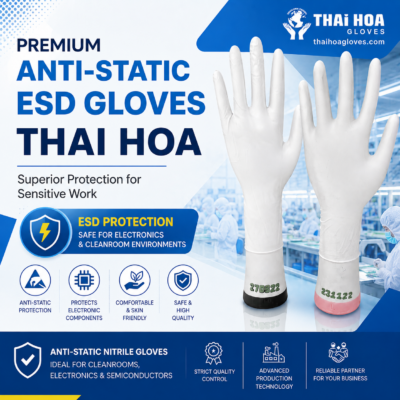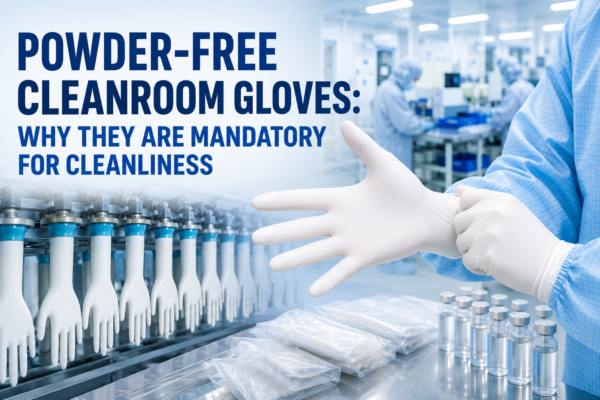


In industries where cleanliness and product integrity are critical, preventing contamination is just as important as protecting workers’ hands. Silicone contamination is a particular concern in electronics manufacturing, semiconductor production, automotive assembly, optics, painting, and other precision manufacturing environments. Even a small amount of silicone residue can affect adhesion, coating quality, printing, bonding, or surface finishing.
One of the most effective ways to reduce the risk of contamination is to select the right disposable gloves for preventing silicone contamination. However, not all disposable gloves offer the same level of cleanliness or contamination control.
This article reviews the key characteristics of disposable gloves and explains why powder-free nitrile gloves are often a practical choice for applications where silicone contamination must be minimized.
What Is Silicone Contamination?
Silicone contamination occurs when silicone-based substances or residues unintentionally transfer onto a product, component, tool, or production surface. Silicone can be found in many industrial products, including lubricants, sealants, release agents, polishes, personal-care products, and some manufacturing materials.
The problem is that silicone residues can be extremely difficult to detect visually. A surface may appear completely clean while still carrying microscopic contamination.
In manufacturing environments, silicone contamination can cause:
- Poor paint or coating adhesion
- Surface defects and cratering
- Bonding problems
- Printing and coating inconsistencies
- Defects in optical components
- Problems during adhesive applications
- Reduced product quality
- Increased rejection and rework rates
For this reason, manufacturers need a contamination-control strategy that includes materials, equipment, employee behavior, cleaning procedures, and appropriate disposable cleanroom gloves.
Why Glove Selection Matters
Workers’ hands are one of the most common potential sources of contamination in a production environment. Even when operators follow strict hygiene procedures, skin oils, lotions, dust, particles, and residues from other materials can transfer to sensitive components.
Gloves create a barrier between the operator and the product. However, gloves themselves can become a contamination source if they contain unwanted additives, powders, residues, or manufacturing contaminants.
When selecting gloves for silicone-sensitive applications, manufacturers should therefore look beyond basic hand protection.
Important considerations include:
- Glove material
- Powder-free construction
- Surface cleanliness
- Particle generation
- Chemical compatibility
- Packaging and handling
- Cleanroom compatibility
- Manufacturing quality controls
Nitrile Gloves: A Strong Choice for Contamination Control
Among disposable glove materials, nitrile has become widely used in electronics, semiconductor, pharmaceutical, laboratory, and cleanroom environments.
Powder-free nitrile gloves are particularly attractive because they provide a combination of flexibility, chemical resistance, durability, and cleanliness.
Unlike powdered gloves, powder-free gloves do not intentionally contain cornstarch or similar powder materials that can become airborne or transfer onto surfaces.
For applications where silicone contamination is a concern, a high-quality nitrile glove manufactured specifically for clean environments can help reduce unwanted transfer from the operator.
Advantages of Powder-Free Nitrile Gloves
1. No Powder Residue
Powder can carry particles and contaminants onto sensitive surfaces. Powder-free nitrile gloves eliminate this particular contamination pathway.
This makes them suitable for applications where surface cleanliness is essential.
2. Good Chemical Resistance
Nitrile generally provides resistance to many oils, chemicals, and industrial substances. This is valuable in manufacturing environments where workers may handle cleaning agents, solvents, oils, or process chemicals.
However, chemical compatibility should always be verified against the specific chemical and exposure conditions.
3. Good Dexterity
Modern nitrile gloves can be manufactured with excellent flexibility and tactile sensitivity. Operators can handle small electronic components and precision parts without sacrificing basic hand protection.
4. Strong Puncture Resistance
Nitrile is generally more puncture-resistant than natural rubber latex. This can help reduce glove failures during repetitive industrial work.
5. Latex-Free Option
For workplaces seeking to reduce exposure to natural rubber latex, nitrile provides a practical alternative.
Are All Nitrile Gloves Suitable for Silicone-Sensitive Manufacturing?
No.
Choosing a nitrile glove does not automatically guarantee protection against silicone contamination. The manufacturing process, raw materials, glove surface, packaging, cleanliness, and quality-control procedures all influence contamination performance.
For highly sensitive applications, manufacturers should look for gloves that are specifically designed for cleanroom and contamination-sensitive environments.
Important specifications may include:
- Powder-free
- Low particle generation
- Low residue
- Cleanroom-compatible packaging
- Controlled manufacturing environment
- Consistent surface quality
- Appropriate chemical resistance
- Lot traceability
- Quality-control testing
In some industries, additional testing may be required to determine whether a particular glove is appropriate for silicone-sensitive processes.
Nitrile vs. Latex vs. Vinyl Gloves
When reviewing disposable gloves for contamination control, it is useful to compare the main materials.
Nitrile Gloves
Nitrile gloves are often the preferred option for industrial cleanroom applications because they combine durability, flexibility, chemical resistance, and powder-free availability.
They are particularly suitable for electronics manufacturing, semiconductor production, laboratories, and other environments where product contamination must be controlled.
Latex Gloves
Latex gloves offer excellent elasticity and tactile sensitivity. However, they contain natural rubber proteins and may not be the preferred option in workplaces seeking latex-free solutions.
Latex gloves can also be unsuitable for certain users due to latex sensitivity.
Vinyl Gloves
Vinyl gloves are generally economical and can be suitable for low-risk applications. However, they may provide lower elasticity and durability than nitrile gloves, making them less suitable for demanding precision manufacturing environments.
For contamination-sensitive industrial applications, glove selection should be based on cleanliness and process requirements rather than purchase price alone.
What Features Should You Look for in Disposable Gloves?
If your primary objective is minimizing the possibility of silicone-related contamination, consider the following glove characteristics.
Powder-Free Construction
This should be one of the first specifications to check. Powder-free gloves minimize the risk associated with loose powder particles.
Cleanroom-Compatible Manufacturing
Gloves intended for cleanroom use should be produced, washed, processed, and packaged according to appropriate cleanliness requirements.
Low Particle Generation
A glove may be powder-free but still generate particles through friction, abrasion, or poor manufacturing quality. Low-particle gloves are therefore preferable for sensitive environments.
Smooth and Consistent Surface
A smooth glove surface can make it easier to control contamination and maintain consistent handling performance.
Chemical Resistance
If workers use solvents, cleaning agents, oils, or other chemicals, select a glove with compatibility appropriate for the process.
Comfortable Fit
Workers may wear gloves for extended periods. A comfortable, flexible glove can help improve compliance and reduce the tendency to touch or adjust the glove unnecessarily.
Silicone-Free Does Not Always Mean Contamination-Free
One important point is that the terms “silicone-free,” “silicone-tested,” and “silicone contamination resistant” should not automatically be treated as identical.
A glove manufacturer may offer specific testing or declarations related to silicone contamination. However, the exact test method and acceptance criteria matter.
Manufacturers purchasing gloves for critical applications should request relevant technical documentation and clarify:
- Whether silicone is intentionally used in production
- Whether silicone contamination testing is performed
- What test method is used
- Whether the gloves are washed
- How gloves are packaged
- Whether the product is manufactured for cleanroom applications
- What cleanliness specifications are guaranteed
This information allows the buyer to select gloves based on documented performance rather than marketing claims alone.
Best Practices for Using Disposable Gloves
Even the highest-quality gloves cannot prevent contamination if they are handled incorrectly.
Operators should follow proper glove-use procedures, including:
- Wash and dry hands before putting on gloves.
- Avoid touching non-clean surfaces after donning gloves.
- Replace gloves when they become damaged or visibly contaminated.
- Do not reuse disposable gloves unless the specific glove and process explicitly permit it.
- Store glove boxes in clean and controlled areas.
- Avoid touching the outside surface unnecessarily.
- Follow the facility’s cleanroom gowning and contamination-control procedures.
- Keep different glove types separated according to their intended application.
Glove changes should also be incorporated into the facility’s standard operating procedures.
Disposable Gloves for Electronics and Semiconductor Manufacturing
Electronics and semiconductor manufacturing requires particularly careful contamination control. Components can be sensitive to particles, residues, oils, and electrostatic discharge.
For these environments, manufacturers may need ESD-safe nitrile cleanroom gloves that combine contamination control with electrostatic-control properties.
The glove should be selected according to the specific production process. For example, an operator handling bare electronic components may have different requirements from someone working with painted surfaces or adhesive bonding.
In addition to glove cleanliness, companies should consider:
- ESD performance
- Surface resistivity
- Particle control
- Cleanroom classification
- Packaging
- Chemical exposure
- Operator comfort
- Glove change frequency
The goal is to create a complete contamination-control system rather than relying on gloves alone.
How to Choose the Best Disposable Gloves
There is no single glove that is perfect for every manufacturing process. The best option depends on the contamination sensitivity, chemicals used, cleanroom classification, required dexterity, and applicable quality standards.
For many industrial applications, powder-free nitrile cleanroom gloves provide an effective balance between cleanliness, protection, flexibility, and cost.
For highly silicone-sensitive applications, however, buyers should request technical documentation and, where necessary, conduct validation testing before approving a glove for production.
A practical selection process can include:
Step 1: Identify the contamination risks.
Step 2: Determine whether the process is silicone-sensitive.
Step 3: Define cleanroom and particle requirements.
Step 4: Select an appropriate glove material.
Step 5: Review manufacturer specifications and test documentation.
Step 6: Conduct sample evaluation under actual production conditions.
Step 7: Monitor contamination performance after implementation.
Conclusion
Selecting the right disposable gloves for preventing silicone contamination is an important part of contamination control in precision manufacturing.
Powder-free nitrile gloves are a strong option for many cleanroom, electronics, semiconductor, pharmaceutical, and industrial applications because they provide durability, flexibility, chemical resistance, and a powder-free barrier between operators and products.
However, glove material alone does not guarantee silicone-free performance. Manufacturers should evaluate the complete glove specification, including production conditions, cleanliness, particle generation, packaging, testing, and process compatibility.
For businesses handling silicone-sensitive products, investing in high-quality nitrile cleanroom gloves can help reduce contamination risks, improve process consistency, and support more reliable manufacturing quality.
The most effective approach is to combine the right gloves with proper gowning procedures, controlled environments, employee training, regular glove changes, and documented contamination-control procedures. Together, these measures provide a stronger defense against silicone contamination and other unwanted residues in sensitive manufacturing environments.