

In industries where contamination control is critical, protecting workers’ hands alone may not be enough. Electronics manufacturing, semiconductor production, pharmaceuticals, precision engineering, and other high-tech industries often require additional protection around the wrists and forearms. This is where Long Cuff Cleanroom Gloves provide an important advantage.
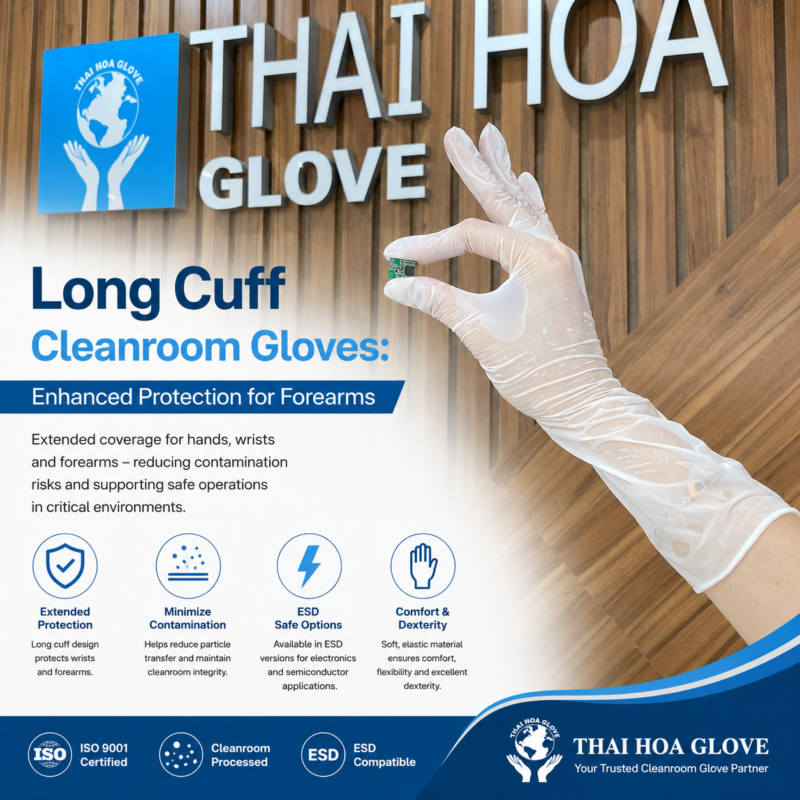
Designed with an extended cuff, long cuff cleanroom gloves provide broader coverage than conventional cleanroom gloves. The longer cuff helps reduce the gap between the glove and cleanroom garment, minimizing potential contamination pathways while improving overall protection and comfort during production processes.
For companies looking for reliable cleanroom gloves for electronics manufacturing, long cuff nitrile gloves can be an effective solution for improving hand and forearm protection while supporting strict contamination-control procedures.
What Are Long Cuff Cleanroom Gloves?
Long Cuff Cleanroom Gloves are specialized gloves designed with an extended wrist section that reaches farther up the forearm than standard disposable gloves.
Traditional cleanroom gloves generally cover the hand and wrist. Long cuff gloves extend this protective area, helping create a more continuous barrier between the operator’s skin and the controlled production environment.
Long cuff gloves can be manufactured from different materials, including nitrile and other synthetic polymers. Among these options, nitrile cleanroom gloves are widely used because of their flexibility, puncture resistance, chemical resistance, and powder-free design.
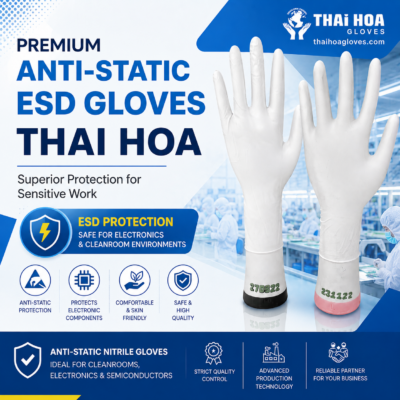
Depending on the manufacturing process, long cuff cleanroom gloves may also be available with anti-static or ESD properties, making them particularly suitable for electronics and semiconductor manufacturing.
Why Choose Long Cuff Cleanroom Gloves?
The wrist area can be an overlooked source of contamination in cleanroom environments. When standard gloves are used with cleanroom garments, movement can create a small gap between the glove cuff and the garment sleeve.
This gap may allow particles, contaminants, or other unwanted substances to come into contact with the operator’s skin or enter the controlled working area.
Long cuff cleanroom gloves help address this issue by extending the protective coverage toward the forearm.
Key benefits include:
- Extended protection around the wrist and forearm.
- Reduced exposure of skin to the cleanroom environment.
- Reduced gaps between gloves and cleanroom sleeves.
- Improved compatibility with cleanroom garments.
- Better protection during repetitive production tasks.
- Potential support for contamination-control procedures.
- Availability of powder-free and ESD-compatible options.
For demanding manufacturing environments, these advantages can make long cuff gloves a practical addition to a comprehensive cleanroom PPE program.
Enhanced Forearm Protection
One of the main advantages of long cuff gloves is their extended coverage.
Standard gloves typically stop around the wrist, while long cuff designs provide additional material that extends toward the forearm. This is especially useful when workers frequently move their arms during assembly, inspection, packaging, or laboratory operations.
The extended cuff can help reduce direct exposure of the lower forearm and minimize the possibility of contact between the operator’s skin and sensitive production areas.
When properly integrated with cleanroom sleeves, long cuff gloves can contribute to a more continuous protective barrier.
Reduced Contamination Risk
Contamination control is one of the most important considerations in a cleanroom.
Human skin naturally releases particles, and improper use of personal protective equipment can increase the risk of contamination. Gloves therefore play an important role in preventing direct contact between the operator and sensitive products.
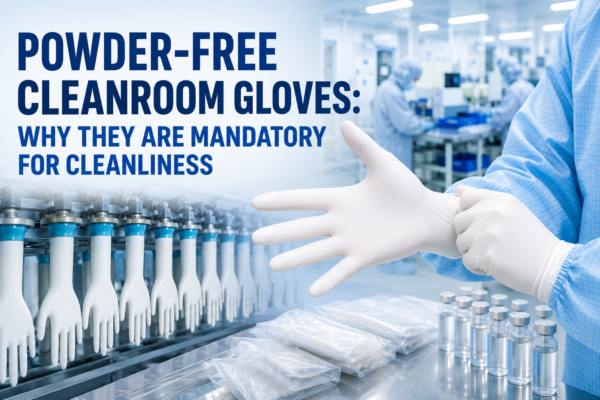
Powder-free long cuff cleanroom gloves can help minimize potential contamination associated with glove powder while providing extended hand and wrist coverage.
For electronics and semiconductor manufacturing, controlling particles is especially important because even small contaminants can potentially affect product quality, reliability, and manufacturing yield.
Long Cuff Nitrile Gloves for Electronics Manufacturing
The electronics industry requires strict control over particles, chemicals, oils, and static electricity.
Workers may handle printed circuit boards, semiconductor components, sensors, connectors, displays, precision components, and other sensitive products. Direct contact with skin oils or contaminants can negatively affect product quality.
For this reason, long cuff nitrile cleanroom gloves for electronics manufacturing can provide several useful advantages.
Nitrile offers good elasticity and flexibility, allowing operators to handle small components with precision. It also provides good resistance to punctures and a range of common chemicals and industrial substances.
When ESD protection is required, manufacturers can select nitrile cleanroom gloves designed with suitable anti-static characteristics.
ESD Protection for Cleanroom Applications
Electrostatic discharge, or ESD, is a major concern in electronics and semiconductor production.
Static electricity can accumulate on people, equipment, and materials. An uncontrolled electrostatic discharge may damage sensitive electronic components, even when the damage is not immediately visible.
For this reason, many electronics manufacturing facilities operate Electrostatic Protected Areas (EPAs) and implement comprehensive ESD control programs.
ESD cleanroom gloves with long cuffs can be incorporated into these programs when their electrical properties are appropriate for the facility’s requirements.
However, gloves should not be considered a standalone ESD solution. They should be used together with other control measures, such as grounded workstations, ESD footwear, appropriate clothing, wrist straps where applicable, and environmental controls.
Benefits of Powder-Free Nitrile Material
Nitrile is one of the most popular materials for modern disposable gloves.
Compared with powdered gloves, powder-free nitrile gloves are particularly suitable for cleanroom environments because they avoid introducing glove powder into the production area.
Important advantages of nitrile include:
Excellent Flexibility
Nitrile gloves can provide a comfortable balance between protection and dexterity. This is important for workers who perform repetitive or highly precise operations.
Good Puncture Resistance
Nitrile generally offers good resistance to punctures, helping reduce the risk of glove failure during routine industrial tasks.
Chemical Resistance
Depending on the formulation and chemical involved, nitrile can provide resistance to various oils, solvents, acids, and alkaline substances.
Always consult the manufacturer’s chemical compatibility data before using gloves with specific chemicals.
Powder-Free Design
Powder-free construction helps minimize unwanted residues and makes nitrile gloves suitable for contamination-sensitive environments.
Applications of Long Cuff Cleanroom Gloves
Long cuff cleanroom gloves can be used across a wide range of industries and production environments.
Semiconductor Manufacturing
Semiconductor production requires stringent particle and contamination control. Long cuff gloves can provide additional coverage when workers handle wafers, components, tools, and sensitive materials.
Electronics Manufacturing
PCB assembly, electronic component production, sensor manufacturing, and precision assembly can benefit from gloves that combine contamination control with dexterity and ESD characteristics.
Pharmaceutical Manufacturing
In pharmaceutical production, gloves can help minimize direct contact between operators and materials. Long cuff designs can provide additional coverage around the wrist and lower forearm.
Precision Engineering
Manufacturing environments involving optical components, precision instruments, and sensitive equipment can also benefit from extended cleanroom glove coverage.
Laboratory Applications
Cleanroom laboratories may use long cuff gloves where extended hand and wrist protection is required during controlled procedures.
How to Choose the Right Long Cuff Cleanroom Gloves
Selecting the correct glove requires more than simply choosing the longest cuff available. Businesses should evaluate the glove according to the specific requirements of their production environment.
1. Cleanliness Level
Check whether the glove is manufactured, washed, packaged, and controlled according to the cleanliness requirements of your cleanroom.
2. Material
Nitrile is a popular option because of its flexibility, durability, powder-free construction, and resistance to many common substances.
3. Cuff Length
Choose a cuff length that works effectively with your cleanroom sleeves and operating procedures.
4. ESD Performance
For electronics and semiconductor applications, verify the glove’s actual electrical and static-control specifications.
5. Thickness
Glove thickness affects dexterity, durability, tactile sensitivity, and protection. The appropriate thickness should be selected according to the application.
6. Comfort and Fit
Workers may wear cleanroom gloves for extended periods. A properly fitting glove can improve comfort and reduce hand fatigue during repetitive operations.
7. Packaging
For cleanroom applications, packaging is also important. Gloves should be packaged in a way that minimizes contamination during transportation, storage, and entry into controlled areas.
Proper Use of Long Cuff Cleanroom Gloves
Even high-quality gloves cannot provide maximum protection if they are used incorrectly.
Operators should follow established cleanroom procedures when putting on, wearing, replacing, and removing gloves.
Before entering the cleanroom, workers should ensure that gloves are clean, undamaged, and suitable for the intended operation. The cuff should be positioned correctly with the cleanroom garment sleeve to minimize unnecessary gaps.
Gloves should be replaced when they become damaged, contaminated, or unsuitable for continued use.
Proper hand hygiene and cleanroom gowning procedures should also be maintained. Gloves are one component of a complete contamination-control system rather than a replacement for good cleanroom practices.
Long Cuff Cleanroom Gloves from Thai Hoa
For manufacturers searching for reliable nitrile cleanroom gloves for electronics and semiconductor production, Thai Hoa provides cleanroom glove solutions designed for demanding industrial applications.
Thai Hoa focuses on powder-free nitrile cleanroom gloves for contamination-sensitive environments, including electronics and high-tech manufacturing.
The combination of nitrile material, cleanroom processing, extended cuff designs, and ESD-oriented options can help manufacturers select gloves according to their specific production requirements.
When purchasing gloves in large quantities, businesses should discuss technical specifications, cleanliness requirements, cuff dimensions, thickness, packaging, ESD characteristics, and application conditions directly with the manufacturer.
Conclusion
Long Cuff Cleanroom Gloves provide enhanced protection by extending coverage beyond the hand and wrist toward the forearm. Their extended cuff can help reduce gaps between gloves and cleanroom garments while supporting contamination-control procedures.
For electronics, semiconductor, pharmaceutical, precision manufacturing, and laboratory environments, long cuff nitrile cleanroom gloves offer a practical combination of protection, flexibility, comfort, and powder-free performance.
When ESD protection is required, suitable anti-static glove specifications should be considered as part of a complete ESD control program.
Ultimately, choosing the right long cuff cleanroom gloves requires careful consideration of cleanliness level, material, cuff length, thickness, ESD performance, chemical compatibility, comfort, and packaging.
With the right glove specification and proper cleanroom procedures, manufacturers can strengthen contamination control, improve operator protection, and support consistent product quality across demanding production environments.